We traveld back in time 1,000 years

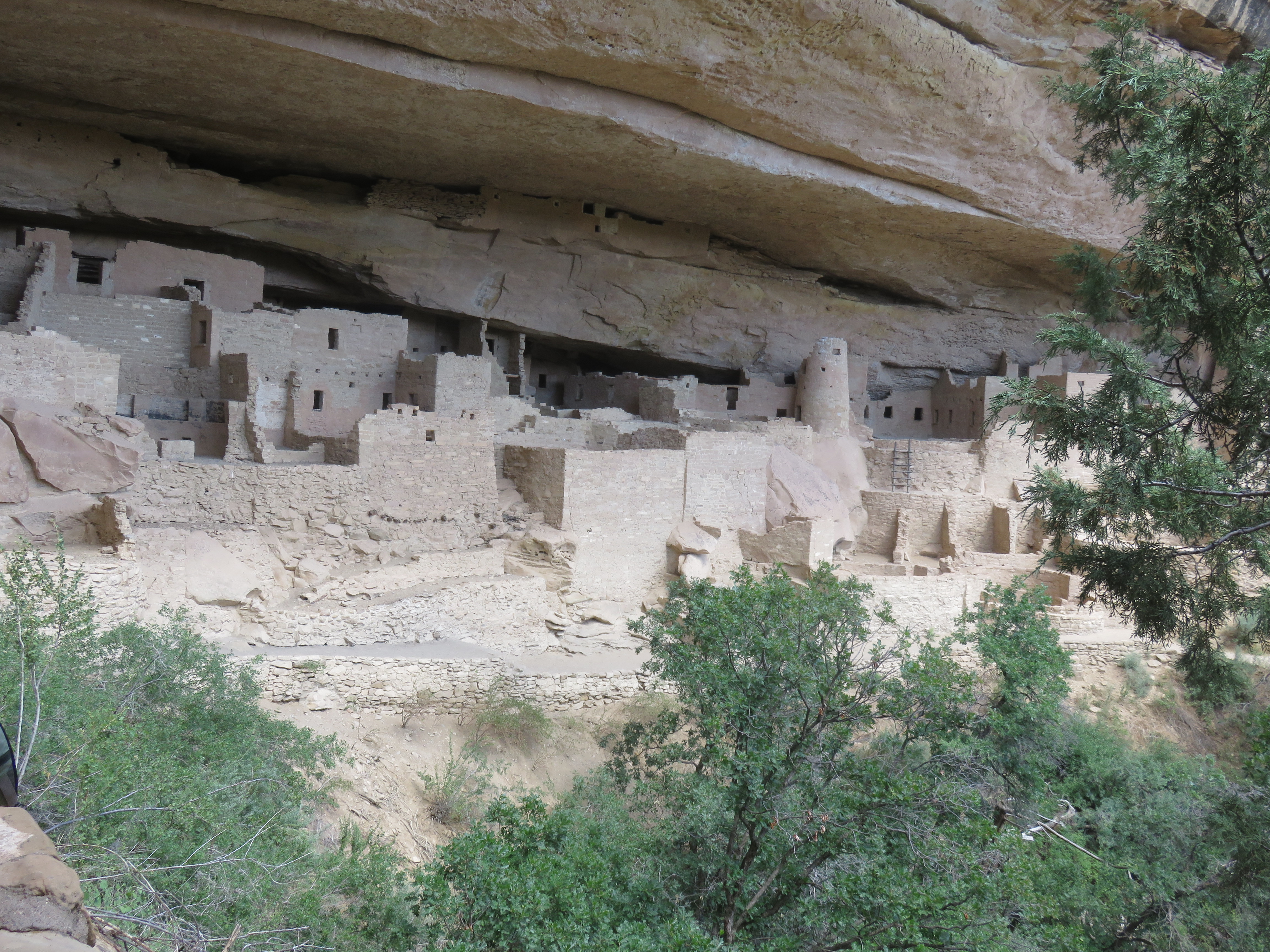
We walked down thousands of stairs, climbed several ladders and walked miles of trails exploring the ancient mesa top and cliff dwellings of Mesa Verde National Park in southern Colorado last week.  For centuries many thousands lived on the mesa, in the canyons.  Then 800 years ago they built over 600 dwellings and grain storage facilities in natural cliff cavities eroded in the sandstone.  Within 100 years of doing so, they were gone, moving south into what is now Arizona and New Mexico.  Archeologists suspect drought, over-population, or possibly war, but are really not sure why these great cliff cities were abandoned.

The early people hunted and fished, living in communities called pueblos of 100 to 200 people.  Water was a cherished resource and corn imported from what is now Mexico allowed them to prosper and grow.  Towards the end of their time here they built the cliff dwellings accessed by toe and hand holds chipped into the sandstone cliff walls or by crude ropes they weaved from yucca plant fibers. 

We enjoyed our visit as we stepped back in time 1,000 years into the past the view this once vibrant society of people.  This weekend we are in Fairplay, Colorado for the 69th Annual Burro Days.  The event features arts and crafts (that’s us), food, entertainment and a burro race.  Participants and their pack burro complete a 30 mile race through valleys and over mountains to win.  The event challenges them to “get their ass over the hill.”
 

When all else fails: Rockhound!

While the crippled train inched back to Durango, we chatted with Drew, the host of our car and discovered that like us, he was a rockhound.  He related some collecting areas in Durango and in Silverton, as well as along our travel route for the next day.  Since the train trip was cancelled, we decided to drive up to Silverton, a one our drive and explore some of the sites Drew mapped out for us on a scrap of paper.  Our train ride to Silverton from Durango only made it about 10 miles out of town before a boiler seal blew on the one-hundred year old locomotive. 

Armed with our treasure map we began our trip, up, up, to over 10,000 feet and beyond the mining town of Silverton in Colorado.  Upon entering the town we stopped at the visitors center to use the facilities and get oriented.  After recounting our train trip failure and desire to rockhound, one of the elderly docents sprang to her feet and volunteered directions on a local map.  Off we went through the quaint town of mostly dirt streets lined with vintage storefronts and up County Road 2.

We pass the Mayflower Gold Mill, other mine sites, off-roaders, a superfund toxic site, ore carts suspended over the road, waterfalls and more.  Our train-ride-host-created-map accurately leads us to the remains of a mill-mining site and we begin our search.

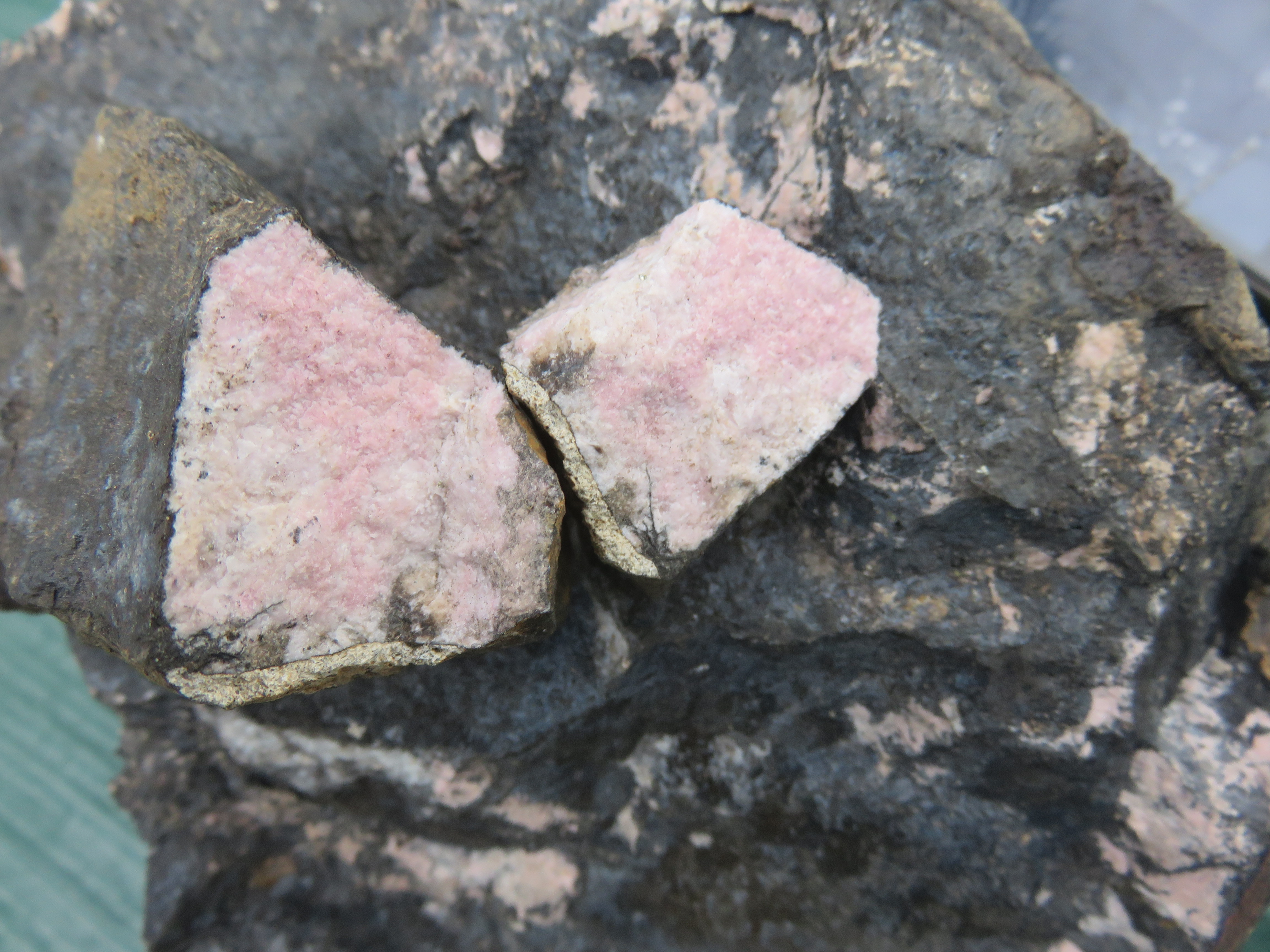
Eureka!  Sherry makes the first find in the parking area below the tailing piles, a dull pink specimen of Rhodonite.  The black Maganese of this pink gemstone tarnishes the entire specimen black, making identification challenging.  A quick strike upon the edge of suspect specimens will reveal the pink, but often another color of a leaverite. Happy with many pounds of hopeful pieces and chunks we enjoy the ride back to our campground.

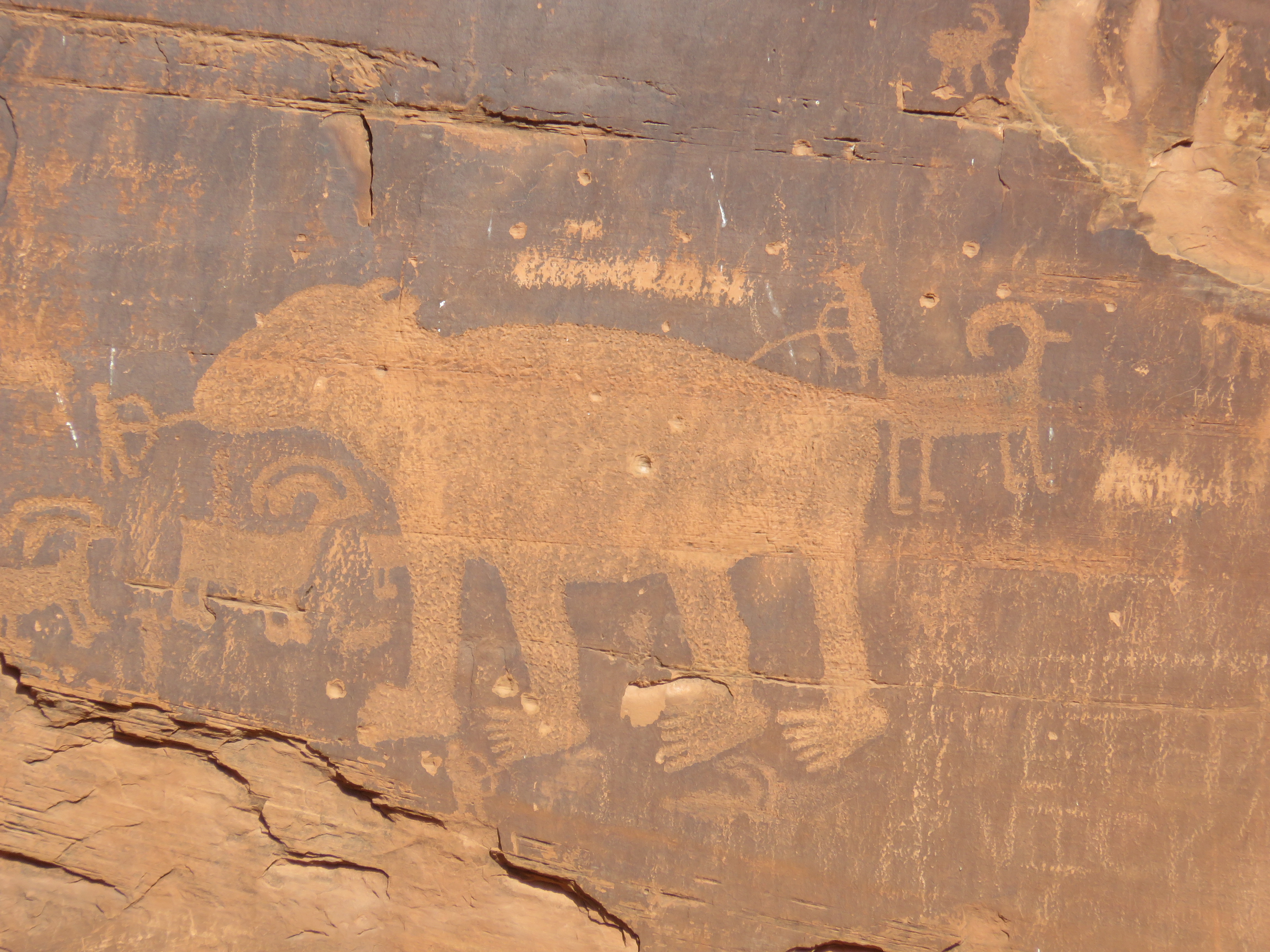
We saw a bear!

It was a petroglyph of a bear.  More often we see deer and big horn sheep in this ancient Indian Rock Art.  While in Moab, Utah we took a petroglyph tour, self-guided along both sides of the Colorado River.  I don’t know why, but I love to seek out and see this art created in stone.  “Desert Varnish,” coated on the sandstone seems to result in the best preserved specimens.  This site, in addition to the bear, includes big horn sheep and may chronicle local wildlife or a hunting trip of that era.   Modern graffiti, also present, is considered vandalism.  Rock art is protected by the Antiquities Act of 1906.